
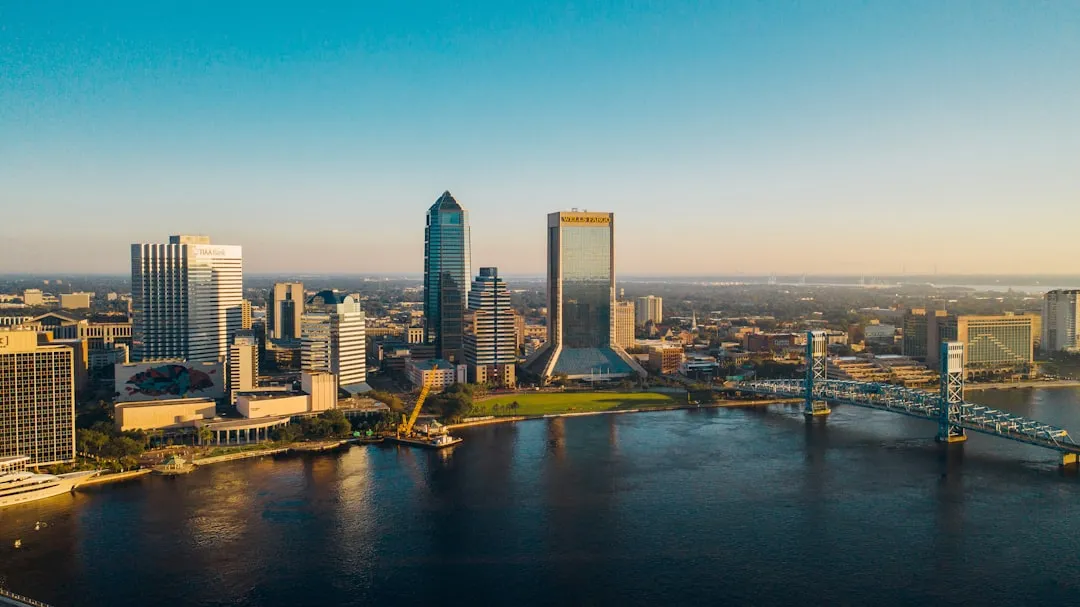
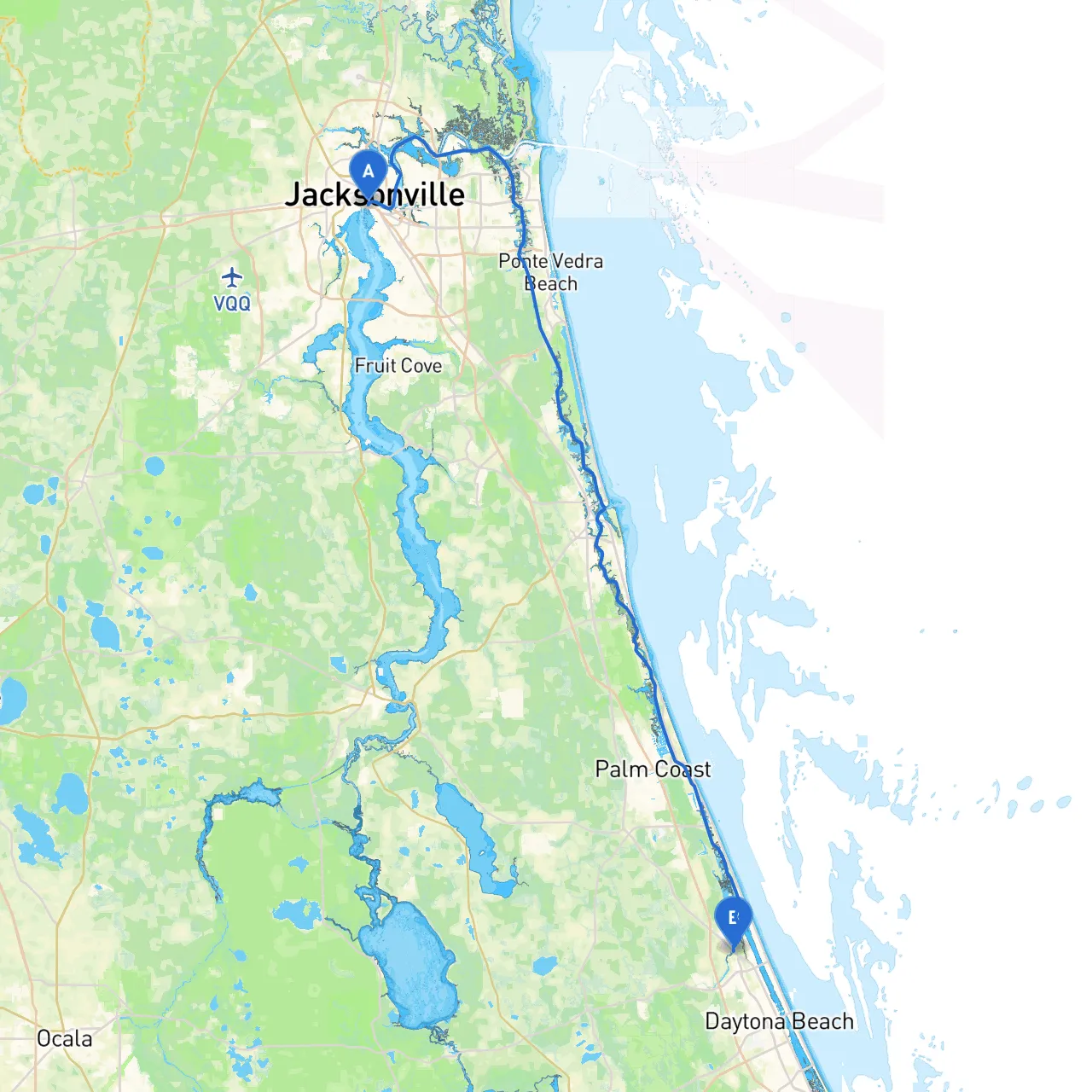
Commence your journey from the bustling port of Jacksonville, situated on the banks of the St. Johns River. Before casting off, it's prudent to check the tide tables and current conditions as the river has varying tidal flows that can affect your navigation.
1. St. Johns River to Intracoastal Waterway (ICW): Head southeast, navigating through the St. Johns River. Pay close attention to navigation buoy markers—green to port and red to starboard—as you approach the confluence with the Intracoastal Waterway. The transition onto the ICW is facilitated by cuts and bridges, notably the Fuller Warren Bridge, which has a vertical clearance of 65 feet. Always monitor the bridge schedules to avoid delays.
2. ICW south to Fort George Inlet: Once you’re on the ICW, it’s smooth sailing southward. After approximately 10 nautical miles, you’ll encounter Fort George Inlet. This area is well-marked with buoys and provides shelter from inclement weather.
3. Fort George Inlet to Nassau Sound: Continuing your journey along the ICW will lead you to Nassau Sound. This spot is not only scenic but also a convenient anchorage for those seeking refuge from rough seas.
As you near your destination, prepare to enter the scenic waters surrounding Ormond Beach. Ensure you’re familiar with the local nautical charts as you transition from the ICW to the vicinity of the beach. Watch for local boat traffic and observe the speed limits as you approach this busy shoreline.
This route from Jacksonville to Ormond Beach is ideal for moderate boating enthusiasts seeking a combination of scenic beauty and safe shelter. With an assortment of natural landmarks and opportunities for exploration along the way, this journey is not only safe but also fun—inviting moments of adventure interspersed with tranquil relaxation. By adhering to the navigational aids and keeping an eye on the weather, you’ll have a memorable experience while ensuring safety on the water. Happy boating!