
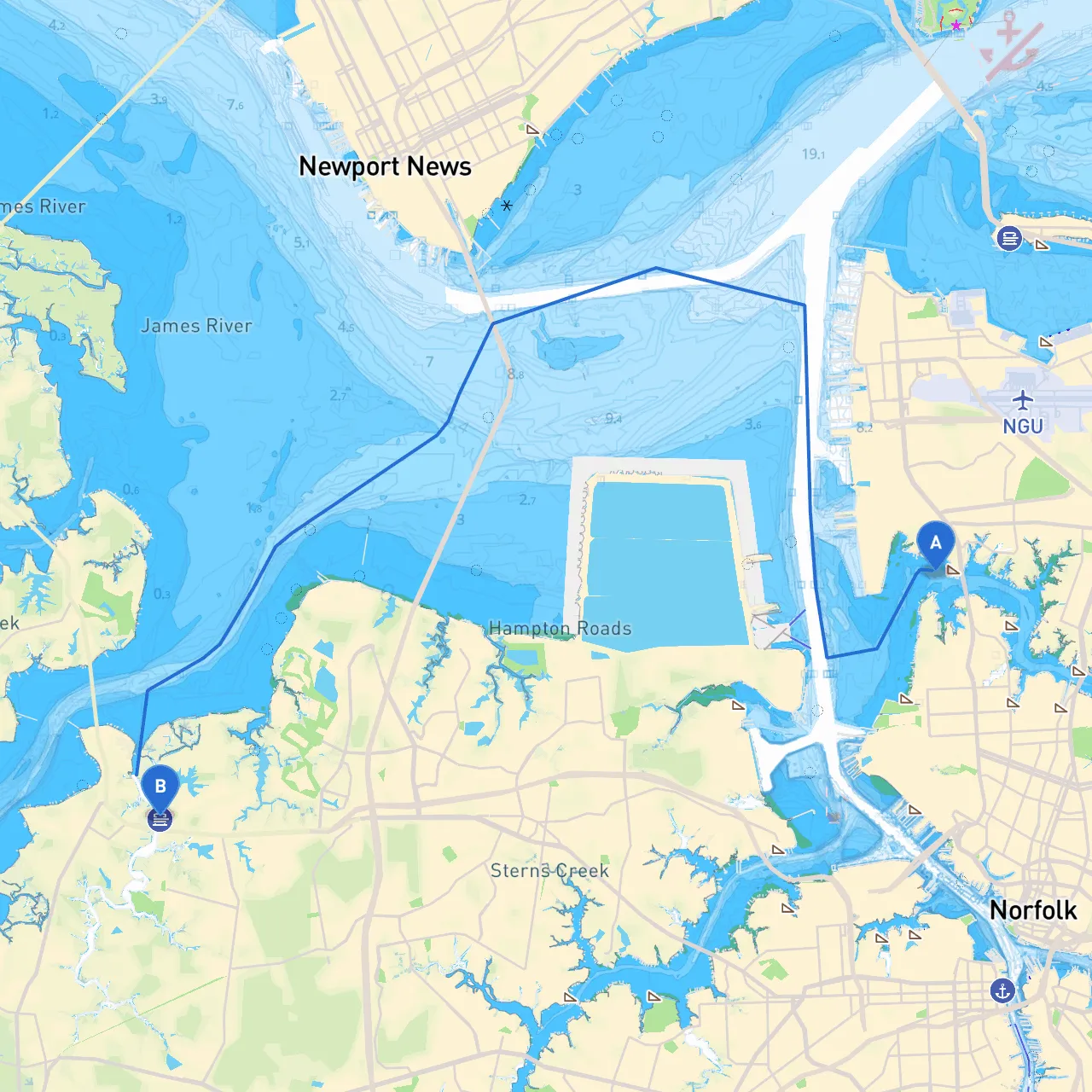
Embarking on a journey from Norfolk, Virginia, to Suffolk, Virginia offers a unique opportunity to explore the scenic waterways of Hampton Roads. Boaters can expect a blend of urban landscapes and natural beauty, with a variety of navigational challenges. This route is particularly suitable for intermediate and experienced boaters who are comfortable with coastal navigation.
Starting Point: Norfolk, VA (Coordinates: -76.3109, 36.9069) You will begin your journey in the bustling city of Norfolk, known for its rich naval heritage and vibrant waterfront. Before setting sail, make sure you've checked your vessel and ensured all safety equipment is in order.
1. Leave Norfolk's Harbor As you depart Norfolk, head northeast toward the Elizabeth River. Pay close attention to the local traffic, especially the ferry and cargo vessels operating in the area. The busy waters around Norfolk require vigilance, so keep a watchful eye on your charts and the necessary aids to navigation.
2. Navigating the Elizabeth River You'll follow the Elizabeth River, renowned for its narrow and winding channels. Look for the markers and buoys that guide you through this section. The river's current can be strong, especially near the inlets, so adjust your speed accordingly.
3. Passing by the Norfolk Southern Railway Bridge Be aware of the Norfolk Southern Railway Bridge, which operates on a schedule and requires you to keep track of opening times for passage. A radio VHF channel 13 could be helpful for communication with bridge operators.
4. Reaching the Southern Branch of the Elizabeth River Stay alert as you approach the fork where the Southern Branch becomes more open. This area offers occasional anchorage spots, such as around the Craney Island Disposal Area, providing a safe haven if the weather turns unfavorable.
5. The Intercoastal Waterway (ICW) Junction Here, you will seamlessly merge with the Intercoastal Waterway. This popular and well-marked route provides excellent navigational aids. The channels here are wider and allow for easier maneuvers, though you should still remain cautious of tidal influences.
6. Shelter at the Nansemond River Shortly after entering the ICW, you will encounter the entrance to Nansemond River, a great spot to take refuge should adverse conditions arise. The river provides adequate shelter with some lovely views of wildlife along its banks. If time allows, consider a brief stop at the nearby parks for a walk or snack.
This pilotage plan not only emphasizes safety but also invites you to enjoy the picturesque views and the charm of Virginia’s coastline. The route from Norfolk to Suffolk is not just a passage, but an opportunity to experience the blend of nature and naval heritage. Be sure to navigate with caution, remain aware of the surroundings, and enjoy this beautiful journey on the water!