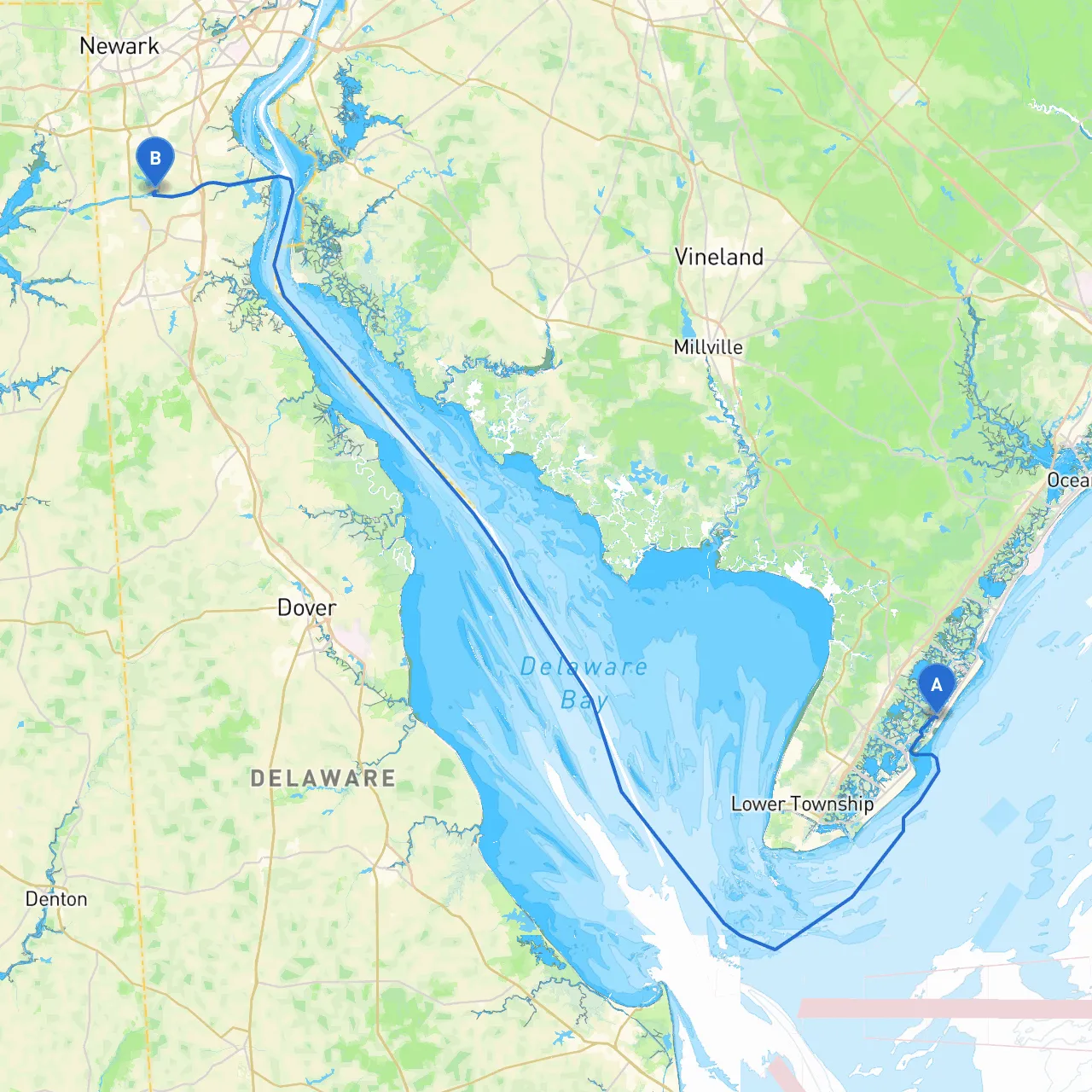
Pilotage Plan: Stone Harbor, New Jersey, to Bear, Delaware
Embarking on a boat trip from Stone Harbor, New Jersey, to Bear, Delaware is an exciting adventure that combines tranquil coastal waters, picturesque scenery, and the thrill of navigating through varied waterways. This route is perfect for experienced boaters as well as enthusiasts looking to expand their cruising repertoire. The itinerary takes into account safety considerations, navigational aids, and charming points of interest along the way.
Route Overview
Starting Point:
- Location: Stone Harbor, NJ
- Coordinates: -74.762735, 39.054285
Ending Point:
- Location: Bear, DE
- Coordinates: -75.707717, 39.547100
The journey covers approximately 30 nautical miles, predominantly through calm bays and rivers.
Sections of the Route
1. Departing Stone Harbor
Leaving Stone Harbor, you'll be surrounded by the idyllic scenery of the New Jersey coast. Before setting off, it’s essential to check the weather forecast and tide tables, as conditions can change quickly.
Hazards to Note:
- Shallow waters and sandbars around the Stone Harbor Inlet may pose challenges. Ensure your chart is up to date and look out for navigational buoys marking safe channels.
Alternative Shelter:
- If conditions worsen, consider heading to The Great Channel, which provides a sheltered area and plenty of space to maneuver your vessel. This is a good spot to wait out rough weather.
2. Navigating through Back Bay
After casting off, proceed towards the Back Bay via designated buoyed channels. This area is calm and offers stunning views of marshlands and wildlife.
Points of Interest:
- Keep your eyes peeled for the Cape May National Wildlife Refuge – a haven for birdwatchers and nature enthusiasts.
Navigational Aids:
- Look for green and red markers along the channel; these are crucial for staying on course, especially in foggy conditions.
3. Crossing over to the Delaware Bay
Once you've navigated through the Back Bay, steer towards the opening of Delaware Bay. This transition marks a shift to a larger, more open area, so maintain a watchful eye on changing weather patterns and boat traffic.
Safety Tips:
- Monitor VHF Channel 16 for any maritime distress communications.
- Be aware of larger vessels transiting the bay, which can create significant wake.
4. Entering the Delaware River
As you head north, you’ll eventually join the Delaware River. This section is often marked with commercial traffic, so keep a vigilant lookout. Follow the navigation charts for the proper shipping lanes and heed the day marks and lights.
Alternative Shelter:
- If you need to stop, the Smyrna River is a safe choice. This inlet allows you to rest while being shielded from significant winds and waves.
Regulatory Considerations:
- Pay close attention to local speed limits and regulations regarding boating along the river to avoid fines or accidents.
5. Final Approach to Bear, DE
As you venture closer to Bear, watch for the confluence of smaller streams and marshes. This area has a blend of residential and natural landscapes, making it a beautiful destination.
Points of Interest:
- The scenic landscapes along the Delaware River often host recreational activities such as fishing and kayaking. Local parks also provide opportunities for hiking and picnics along the shoreline.
Navigational Aids:
- Continue to watch for river buoys and be aware of the occasional low bridges or obstacles that may require careful navigation.
Useful Navigation Apps
For additional support while navigating this route, consider using the following mobile applications:- Savvy Navvy: Excellent for route planning and finding safe passages.
- Windy: Perfect for monitoring weather conditions to anticipate changes that might affect your trip.
Completing this journey from Stone Harbor to Bear is not only a testament to your boating skills but also an opportunity to immerse yourself in the natural beauty of the Mid-Atlantic region. This trip is ideal for seasoned boaters who appreciate the delicate balance of navigating busy waterways while staying keenly aware of safety and environmental preservation. As you set off, remember: preparation is key, and the open waters await your exploration and adventure!