

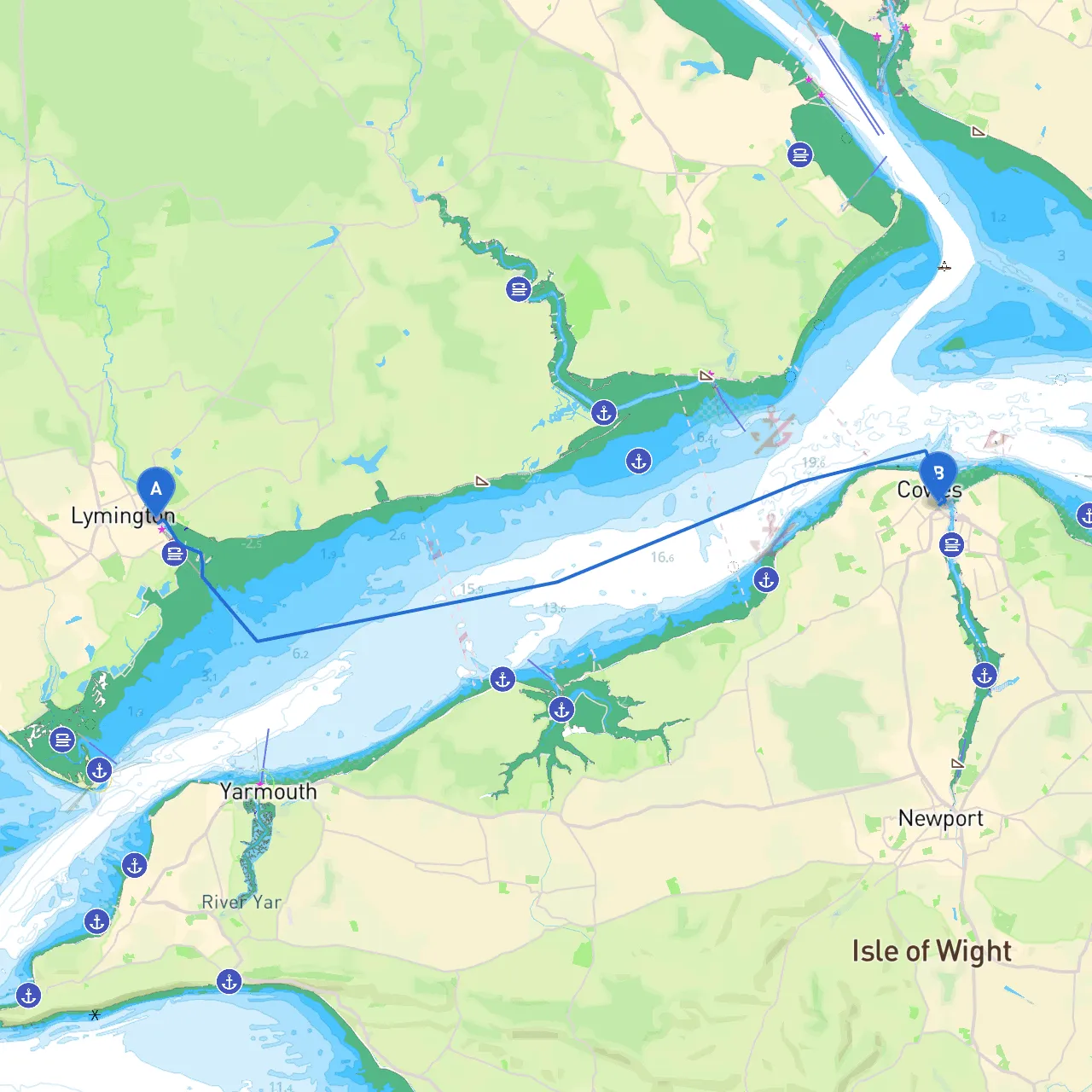
Pilotage Plan for Lymington to Cowes
Starting Point: Lymington, Hampshire, GBEnding Point: Cowes, Isle of Wight, GB
This route from Lymington to Cowes is not only picturesque but also rich with local culture and history, making it an ideal journey for sailors seeking both safety and enjoyment on the water. The stretch you're about to navigate covers approximately 10 nautical miles, depending on the course taken.
Before you set sail, it’s essential to be aware of tides and weather conditions, as they can significantly affect your journey. The Solent can experience strong currents, particularly around the Lymington River entrance and navigating up to Cowes. Check local tide tables; the tidal ranges here can be substantial, averaging around 3 to 4 meters.
Sea/Landmarks and Points of Interest:1. Lymington River: As you depart Lymington, keep an eye out for the charming homes lining the riverbanks and the historic marina filled with a mix of leisure and working boats. 2. Hurst Spit: About 3 nautical miles to the east of Lymington, this sandy spit is a great landmark. It provides shelter from easterly winds, and the waters on its seaward side can be quite serene at times.3. The Needles: Further along your transit, take note of The Needles at the western tip of the Isle of Wight. While you will not pass extremely close, their iconic chalk formations are a must-see from a distance. The surrounding waters can be choppy, so stay well clear.4. Northwood Park: As you approach Cowes, this lovely park offers a pleasant view from the water, lined by eclectic cliff-side Victorian homes.
Should the weather take a turn for the worse, the following bays provide suitable shelter:
Local regulations include observing any speed limits in the marinas (typically around 6 knots) and adhering to the right of way between racing and cruising vessels, especially during regatta season.
Arriving at Cowes offers a delightful blend of history and vibrant maritime activity. You can enjoy a stroll around the harbor, check out local shops and restaurants, or perhaps visit the famous Cowes Maritime Museum for a glimpse into the town’s seafaring past.
This route is particularly suited for experienced leisure sailors and cruising families, given the manageable distance and the relative shelter once past Hurst Spit. However, it requires careful attention to tide and weather conditions, making it best approached by boaters who understand the nuances of maritime navigation.
While navigating this beautiful stretch of water, consider using savvy navvy, which offers not just chart plotting but also vital tide information and positions of hazards. Other navigation apps can also be helpful, but savvy navvy is a particularly user-friendly option that stands out for its detailed approach.
In conclusion, your journey from Lymington to Cowes promises safety, adventure, and breathtaking views, providing a perfect combination for an enjoyable day out on the water. Always prioritize safety and make sure to be vigilant throughout your passage. Happy sailing!