
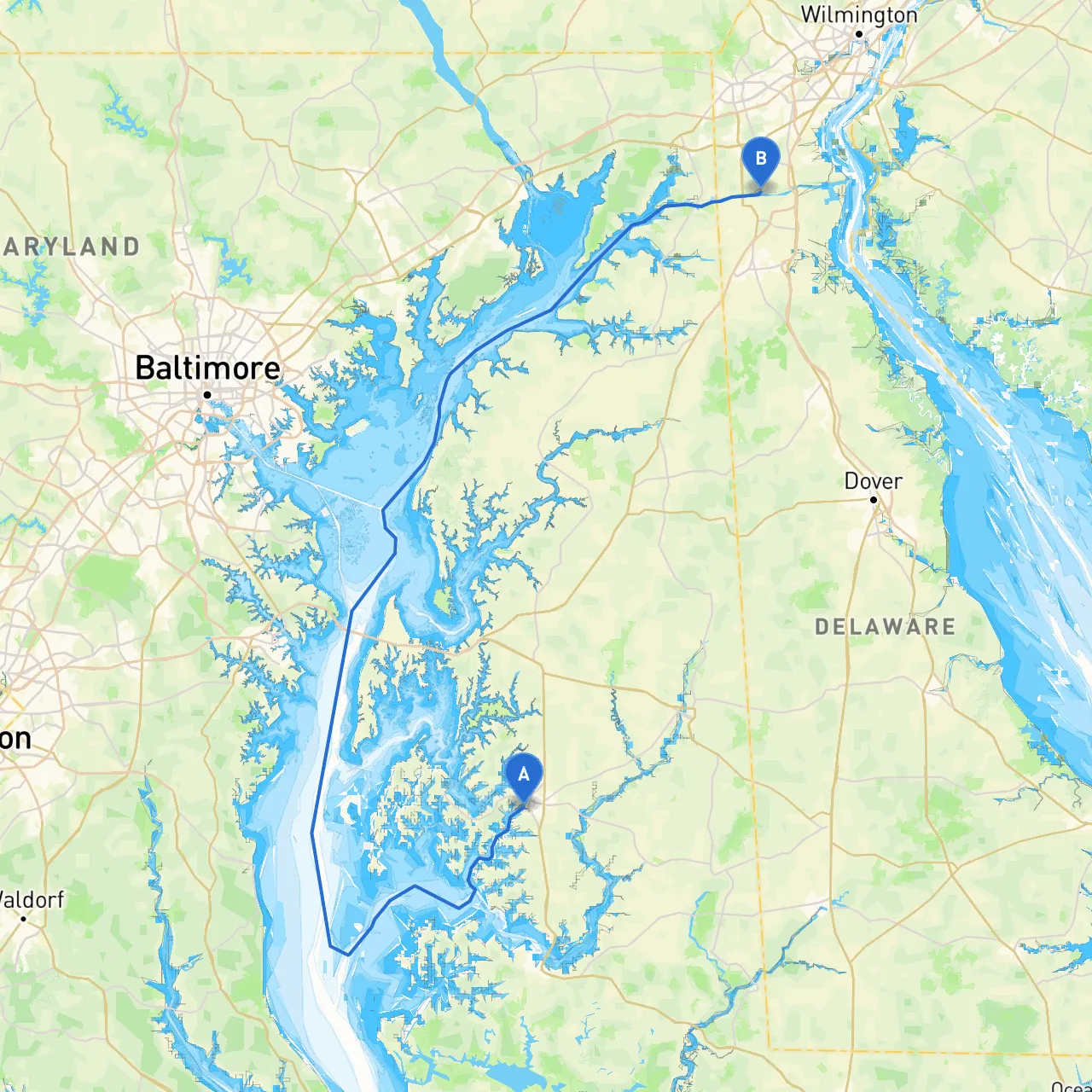
Your journey begins at the picturesque Easton, Maryland, nestled in Talbot County. Here, you can take in the charming colonial architecture and local shops before setting sail. Make sure to check the local weather conditions, tides, and prevailing winds, as they will play a significant role in your navigation.
The route from Easton to Bear spans approximately 40 miles, leading through the serene waters of the Chesapeake Bay, before transitioning into the tidal regions of the Delaware River. This trip is suitable for a range of boaters but is particularly rewarding for those who appreciate a blend of inland and coastal cruising.
Distance: About 10 miles Key Points:
1. Navigational Aids: From Easton, you'll start navigating the Tred Avon River. Follow the buoys, and pay close attention to the marked channels to avoid shoals. The Tred Avon is well-marked, ensuring your journey is straightforward.
2. Safety Precautions: As you exit the river into the Chesapeake Bay, monitor for any fishing vessels and take care with your wake as you pass by residential areas along the shore.
Points of Interest: Once in the Bay, the peaceful sail offers an opportunity to catch a glimpse of local wildlife and, possibly, some historic skipjacks.
Distance: Approximately 15 miles Key Points:
1. Navigational Aids: Maintain awareness of marked channel markers. The Kent Narrows may be busy with boat traffic; ensure you keep a lookout for other vessels and stay within the designated navigation routes.
2. Bays for Shelter: If the weather takes a turn, the Sassafras River offers a sheltered inlet. It’s well-known by local boaters as a calm spot, providing safe anchorage to ride out any inclement weather.
Activities: Consider a stop at one of the small marinas along the Sassafras for some local cuisine, or simply to relax and stretch your legs.
Distance: About 10 miles Key Points:
1. Navigational Aids: As you transition into the Delaware Bay, expect to see buoy systems that lead you safely into the river. Be on the lookout for commercial shipping vessels, and remember to keep a safe distance from the shipping lanes.
2. Local Regulations: Familiarize yourself with regulations governing this stretch, particularly regarding fishing and anchoring in protected areas.
Sheltering Bays: The Delaware River has several spots for anchoring and seeking shelter, particularly around Little Tinicum Island, should the weather take a turn.
Distance: Approximately 5 miles As you close in on Bear, navigate towards the C&D Canal. The approach features well-marked channels guiding you toward your final destination. Be mindful of the traffic in this busy waterway.
Before disembarking, check in with any local harbor masters or facilities to ensure compliance with docking and local regulations. Bear itself is home to charming parks and a vibrant local community, perfect for a relaxing end to your journey.
Enhancing your trip's safety and navigation can be easily managed with the right tools. I suggest using "savvy navvy" for navigational planning alongside traditional charts. Additionally, consider apps like Navionics for real-time maps and tidal information, and Weather Underground for accurate weather updates.
This pilotage plan is designed to ensure a safe and enjoyable trip from Easton to Bear. Embrace the journey and always prioritize safety while relishing the waterways and natural beauty along the route. Happy boating!