
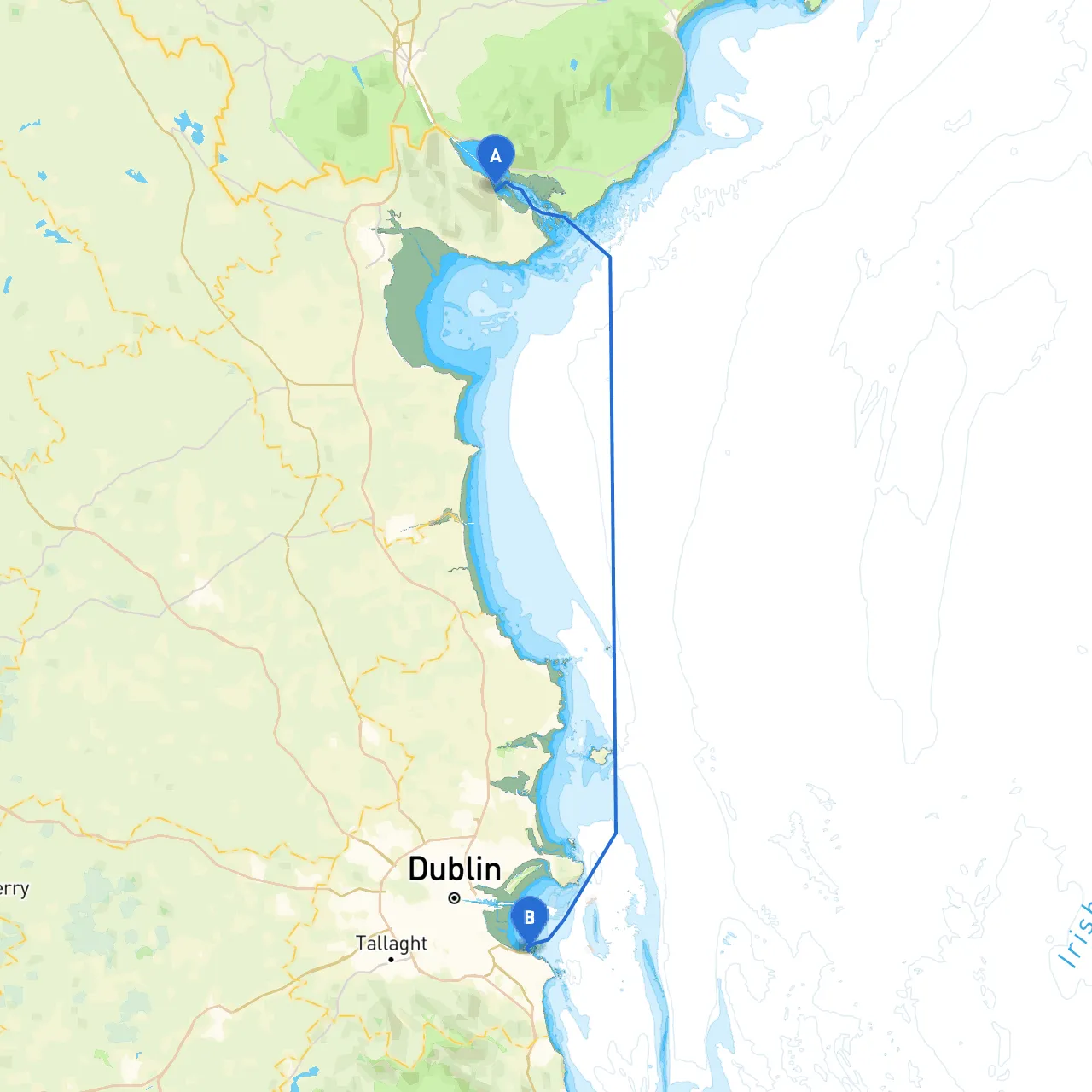
Embarking on a boating journey from Carlingford to Dublin is not only a thrilling adventure but also a test of your navigational skills. This route offers stunning views, historical landmarks, and potential stopover points, while also ensuring that safety is a priority. Ideal for experienced boaters comfortable with coastal navigation, this journey promises both challenges and delights.
You’ll begin your voyage in Carlingford, famous for its maritime history and stunning backdrop of the Mourne Mountains. Your route will largely follow the eastern coastline of Ireland, giving you some breathtaking scenery along the way.
1. Departure from Carlingford - Start your journey by navigating out of Carlingford Lough. As you depart, keep an eye on the navigational aids in the lough, particularly the Carlingford Lough Light Buoy. Maintaining a safe distance from the shore is important, especially around the rocky areas typical of this coastline.
2. Navigating towards Dundalk Bay - As you head southward, aim towards the entrance of Dundalk Bay, which provides a wide and relatively sheltered area. Beware of the tidal currents that can be strong here, particularly around Clogherhead Point, so consult the tidal charts for timing your passage.
3. Sheltering Options: Port Oriel - If the weather takes a turn, Port Oriel is a reasonably safe harbor where you can anchor and wait out changes in the weather. This small but quaint harbor is perfect for a brief stop.
4. Continuing South towards Baltray - After passing Port Oriel, continue into Baltray where the landscape features lovely sandy beaches. The currents will become gentler, but still pay attention to your navigation as this area is known for its shifting sands.
5. Navigating Past the River Boyne - As you approach the River Boyne estuary, exercise caution. There can be shifting sandbanks here, and it’s crucial to stick to marked channels. Notable landmarks, such as the historic town of Drogheda, can be seen just up the river, and it may tempt you to explore its rich history for a short while.
6. Approaching Dublin Bay - After passing the River Boyne, you'll be entering Dublin Bay. The Dublin Bay entrance can be busy, so approach with careful watch on commercial traffic. The iconic Poolbeg Lighthouse is a notable landmark to spot as you enter.
7. Arrival in Dublin - Upon arrival at Dublin, you’ll be greeted with a bustling city atmosphere. The Dublin Marina can be a great place to dock and explore the vibrant culture, culinary offerings, and historical sites like Dublin Castle or the Guinness Storehouse.
Throughout your journey, keep the following navigational aids in mind:
This route from Carlingford to Dublin not only challenges your boating skills but also offers captivating experiences both on and off the water. Keep safety as your primary concern, respect local regulations, and enjoy the stunning Irish coastline. Each stop offers potential for adventure and cultural immersion, making this journey both memorable and secure.