

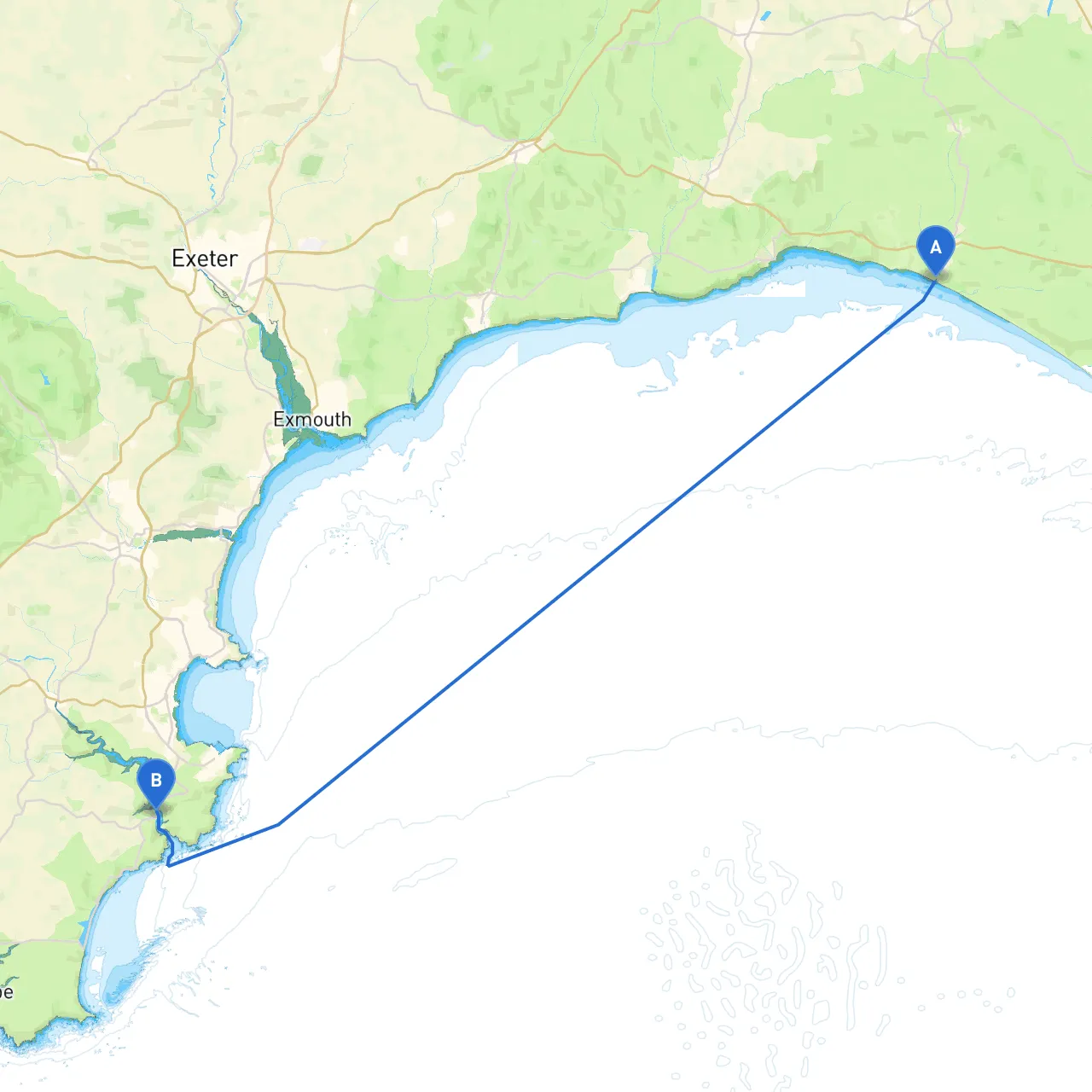
Pilotage Plan: Bridport, GB to Dartmouth, GB
Route OverviewThis voyage from Bridport to Dartmouth is rich with stunning coastal scenery, historical landmarks, and charming bays perfect for shelter or a break along the way. Ideal for experienced and intermediate boaters, this route offers a wonderful mix of navigation challenges and safe havens for moments when the weather takes a turn.
Section 1: Departure – Bridport, DorsetAs we set off from Bridport, you’ll want to check your charts and ensure your navigation equipment is up to date. Departing from Bridport Harbour, be cautious of the rocky formations and shallows near the entrance, particularly the nearby Chesil Beach to the west. Align your heading towards the southwest, setting a course that keeps you at a safe distance from the shore.
Points of Interest:
Section 2: Navigating Lyme BayAs you head out into Lyme Bay, this stretch requires careful navigation. Maintain a keen eye on the navigational markers, particularly the Lyme Bay Buoy and the East and West Shambles Buoys, which will guide you as you move south. The waters can be busy with fishing vessels, so keep a lookout for their movements.
Shelters:
Section 3: Heading Towards TorbayContinuing along the shoreline, keep the majestic cliffs to your starboard. As you approach Torbay, you will start to see the cliffs of Berry Head, which is a natural feature that signals your nearing approach to Brixham and Paignton.
Points of Interest:
Navigational Aids/Considerations:
Section 4: Approach to DartmouthFinal leg of the journey, as you approach Dartmouth, maintain course while keeping an eye on the Dartmouth/Naval College Marker and the Dartmouth Green Buoy. This is a beautiful harbour steeped in history.
Shelters:
Points of Interest in Dartmouth:
Safety Precautions:1. Before leaving, always ensure your safety equipment (life jackets, flares, first aid kits) is readily available and functional.2. Stay updated with weather forecasts. The English Channel can change rapidly; utilize reliable apps like Savvy Navvy for real-time weather updates and navigation support.3. Ensure you understand the tidal patterns in the region; especially in estuarine environments like Dartmouth, where tide flows can be strong.4. Consider your boat’s capabilities and personal experience level when executing this trip. Areas of strong currents and busy marine traffic may be challenging for less experienced boaters.
This planned route not only provides a safe passage but also delivers a wealth of experiences along the stunning Jurassic Coast, ensuring you can enjoy every moment of your journey. Happy sailing!